
A crown needs the same daily plaque control as a natural tooth, especially at the gumline. Temporary crowns need extra care against dislodgement. A loose crown, persistent pain or a bite that feels high should be reviewed rather than adjusted at home.
Caring for a temporary crown
Follow the dentist's eating instructions and avoid sticky or very hard foods on that side. Wait for numbness to wear off before chewing. Brush gently. Ask how to floss around the temporary crown; you may be shown how to slide the floss out sideways. Contact the clinic if it loosens or comes off, and keep the crown safely if you have it.
After a permanent crown is fitted
Ask when the cement or bonding system allows normal chewing. A short period of sensitivity may occur, but the crown should not repeatedly interfere with closing your teeth. Tell the clinic if the crowned tooth touches first, hurts on biting or feels unstable. Do not grind it down yourself.
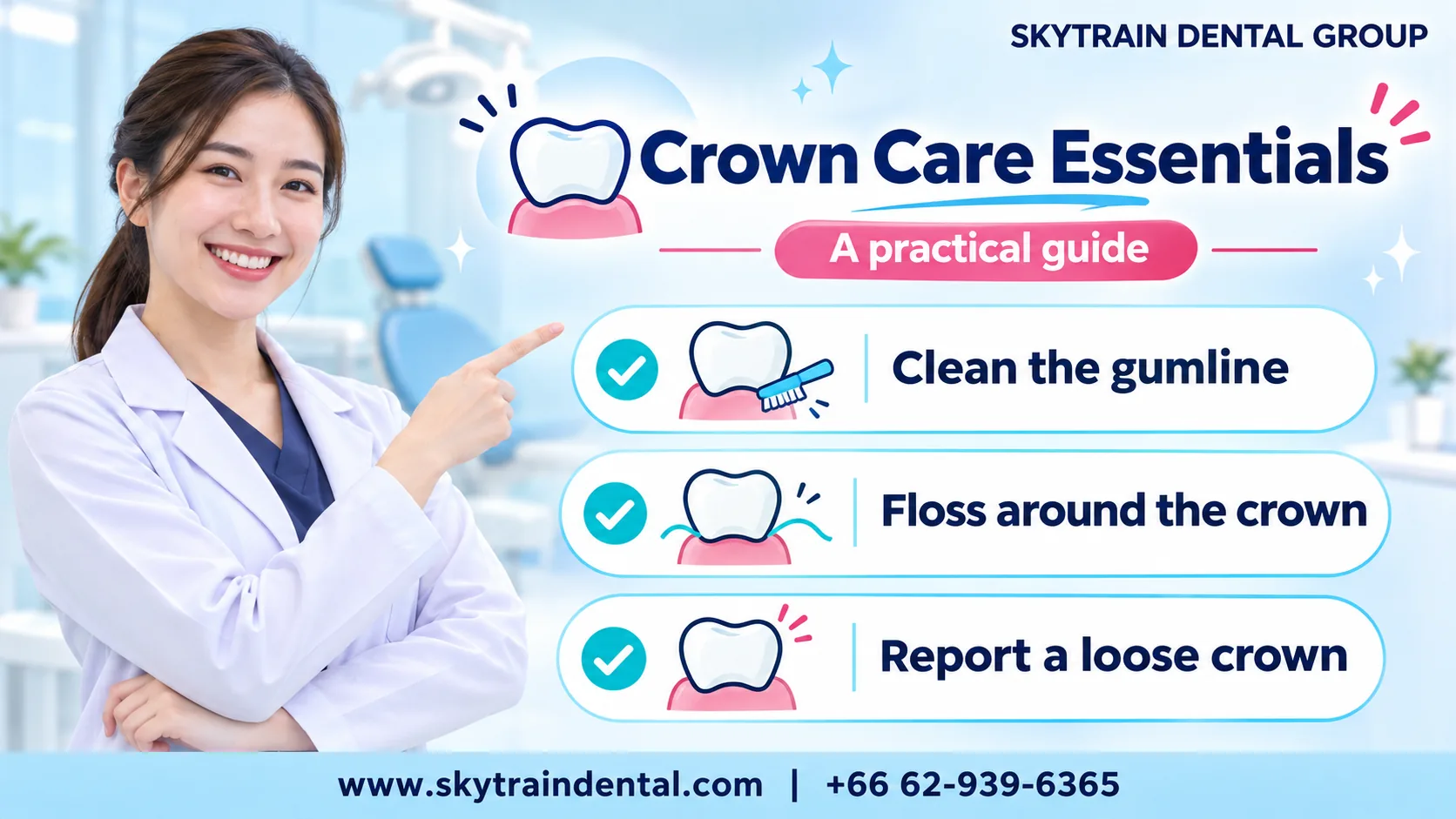
Protect the tooth beneath the crown
The crown material itself cannot decay, but natural tooth structure near its edge can. Brush with fluoride toothpaste and clean between teeth daily. Keep the gumline accessible and ask for help if floss catches or food repeatedly packs beside the crown. Avoid biting ice, hard objects or opening packaging with your teeth.
Long-term checks and repairs
Longevity varies with the remaining tooth, material, bite, decay risk and habits. There is no guaranteed replacement date. Ask about a protective appliance if you grind. Attend reviews and report a chipped edge, swelling, bad taste or new pain. Do not use household glue on a loose crown.
Frequently asked questions
Can a crowned tooth still get a cavity?
Yes. Decay can develop at the crown margin or on exposed natural tooth.
Is a high bite something I should get used to?
A bite that feels uneven or painful should be checked.
Will every crown last 10–15 years?
No. Some last longer and some need attention sooner. Condition matters more than age alone.
What if I swallow or inhale a crown?
Seek medical advice. Breathing difficulty or suspected inhalation needs immediate emergency assessment.
Speak with Skytrain Dental
For an assessment or advice about your treatment, contact Skytrain Dental Group on +66 62-939-6365 or LINE @skytraindental. Follow the instructions given by your treating clinician.
Sources and related reading
References checked 6 November 2026.
Related reading