

After scaling, mild tenderness, brief bleeding or temporary sensitivity may occur. Continue gentle cleaning and follow any advice about local anaesthetic or fluoride. Deep gum treatment may require more aftercare and follow-up than a routine cleaning.
Routine scaling vs deep gum treatment
Scaling removes plaque and tartar, also called calculus. Some people need only routine cleaning; others need treatment below the gumline for periodontitis. The extent of inflammation, treatment depth and use of local anaesthetic affect recovery. Ask which procedure you received and when the gums will be reassessed.
Eating and sensitivity
If your mouth is numb, wait until normal sensation returns before chewing and avoid hot drinks. Otherwise, eat when comfortable unless a fluoride product has separate restrictions. Choose softer foods and avoid temperatures that trigger sensitivity. A sensitivity toothpaste may help; ask which product suits you. Pain that is increasing or preventing normal eating deserves a review.
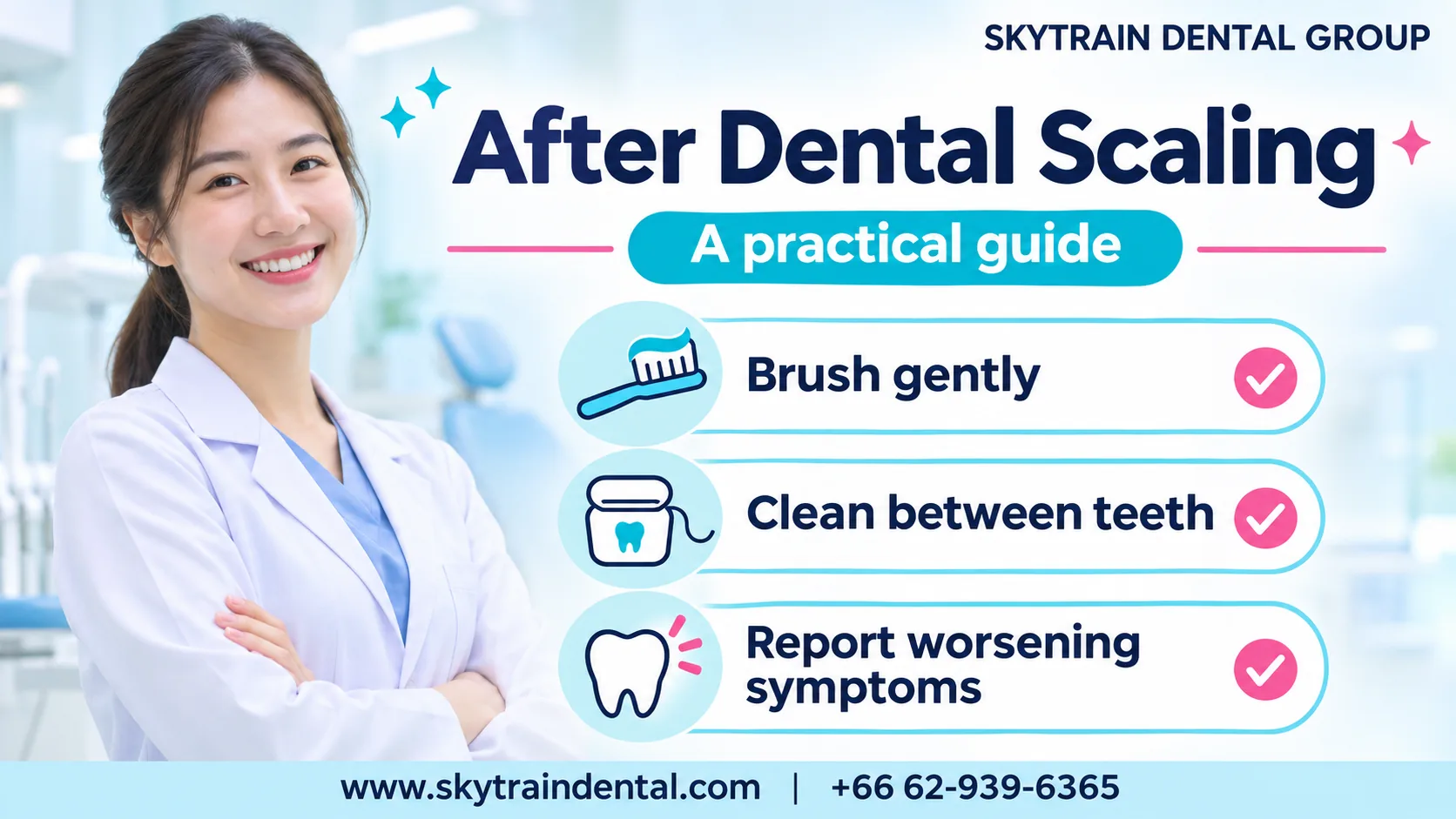
Keep cleaning gently
Use a soft toothbrush with fluoride toothpaste and clean between teeth with the tool and size recommended for you. Do not stop cleaning simply because inflamed gums bleed slightly. Be gentle rather than scrubbing harder. Use a prescribed rinse only as directed; it is not a replacement for removing plaque.
Follow-up and warning signs
As swelling settles, spaces may become more noticeable. This can reveal pre-existing loss of gum support; it does not mean the scaler cut away healthy tooth support. Report new or increasing mobility rather than assuming it is normal. Contact the clinic for persistent or heavy bleeding, swelling, fever or symptoms that fail to improve. Maintenance intervals should reflect gum health and risk, not an automatic schedule for everyone.
Frequently asked questions
Does scaling damage enamel?
Professional scaling is intended to remove deposits safely. Ask the clinician about any sensitivity or exposed root surfaces.
Why do my teeth feel different afterwards?
Removing deposits and reducing gum inflammation can change how tooth surfaces and spaces feel.
Do I need antibiotics?
Not routinely. Medicines or rinses are prescribed when the dentist identifies a reason.
How often should I return?
Your dentist will set a review and maintenance interval based on gum disease, plaque control and other risks.
Speak with Skytrain Dental
For an assessment or advice about your treatment, contact Skytrain Dental Group on +66 62-939-6365 or LINE @skytraindental. Follow the instructions given by your treating clinician.
Sources and related reading
References checked 6 November 2026.
Related reading