
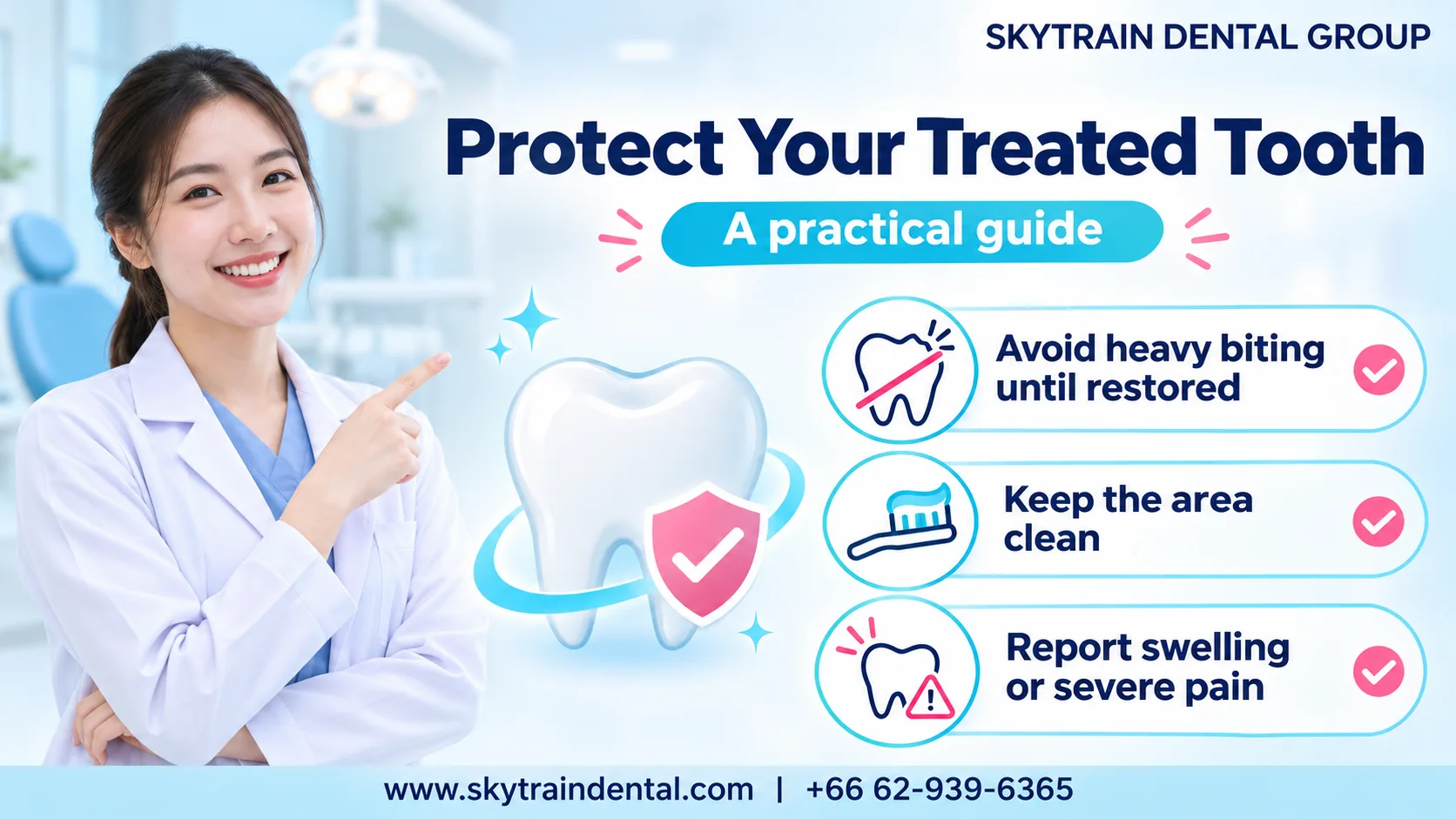
Mild tenderness can occur for a few days after root canal treatment. Protect the tooth from heavy biting until your dentist completes the final restoration. Severe or increasing pain, swelling, an uneven bite or loss of a temporary filling needs prompt advice.
What recovery may feel like
The tissues around the root can remain tender even after the inflamed or infected pulp has been treated. Mild jaw soreness can also follow a long appointment. Symptoms should generally improve. Follow your dentist's pain-relief advice and the medicine label; tell the team about allergies, pregnancy, medical conditions and other medicines.
Eating and cleaning
Avoid chewing while your mouth is numb. Afterwards, choose comfortable foods and avoid loading the treated tooth until your dentist says it is ready. Continue brushing and interdental cleaning gently. A tooth that feels comfortable may still be vulnerable if only a temporary restoration is present.
Why the final restoration matters
Root canal treatment addresses the inside of the tooth; the restoration seals and protects the remaining tooth structure. A permanent filling, onlay or crown may be appropriate depending on the tooth, the amount of tissue lost and biting forces. Book this stage promptly. Not every treated tooth needs the same restoration, and not every crown needs a post.
When to call and how to follow up
Contact the clinic for severe pain, visible swelling, a bite that feels high, a lost temporary restoration or a return of the original symptoms. Fever or spreading swelling needs urgent assessment; breathing or swallowing difficulty is an emergency. Attend the planned clinical and X-ray reviews even if pain has gone. A root-treated tooth still needs daily care and can develop decay or other problems.
Frequently asked questions
Does soreness mean treatment failed?
No. Early tenderness can be temporary, but severe, worsening or persistent symptoms should be assessed.
Can I chew normally once the pain stops?
Ask your dentist first. Comfort does not confirm that the tooth is fully restored or protected from fracture.
Will I always need a crown?
No. The restoration depends on tooth location, remaining structure and bite.
Can a treated tooth become painful years later?
Yes. New decay, fractures or recurrent disease can occur, so new pain or swelling needs a dental review.
Speak with Skytrain Dental
For an assessment or advice about your treatment, contact Skytrain Dental Group on +66 62-939-6365 or LINE @skytraindental. Follow the instructions given by your treating clinician.
Sources and related reading
References checked 6 November 2026.
Related reading