

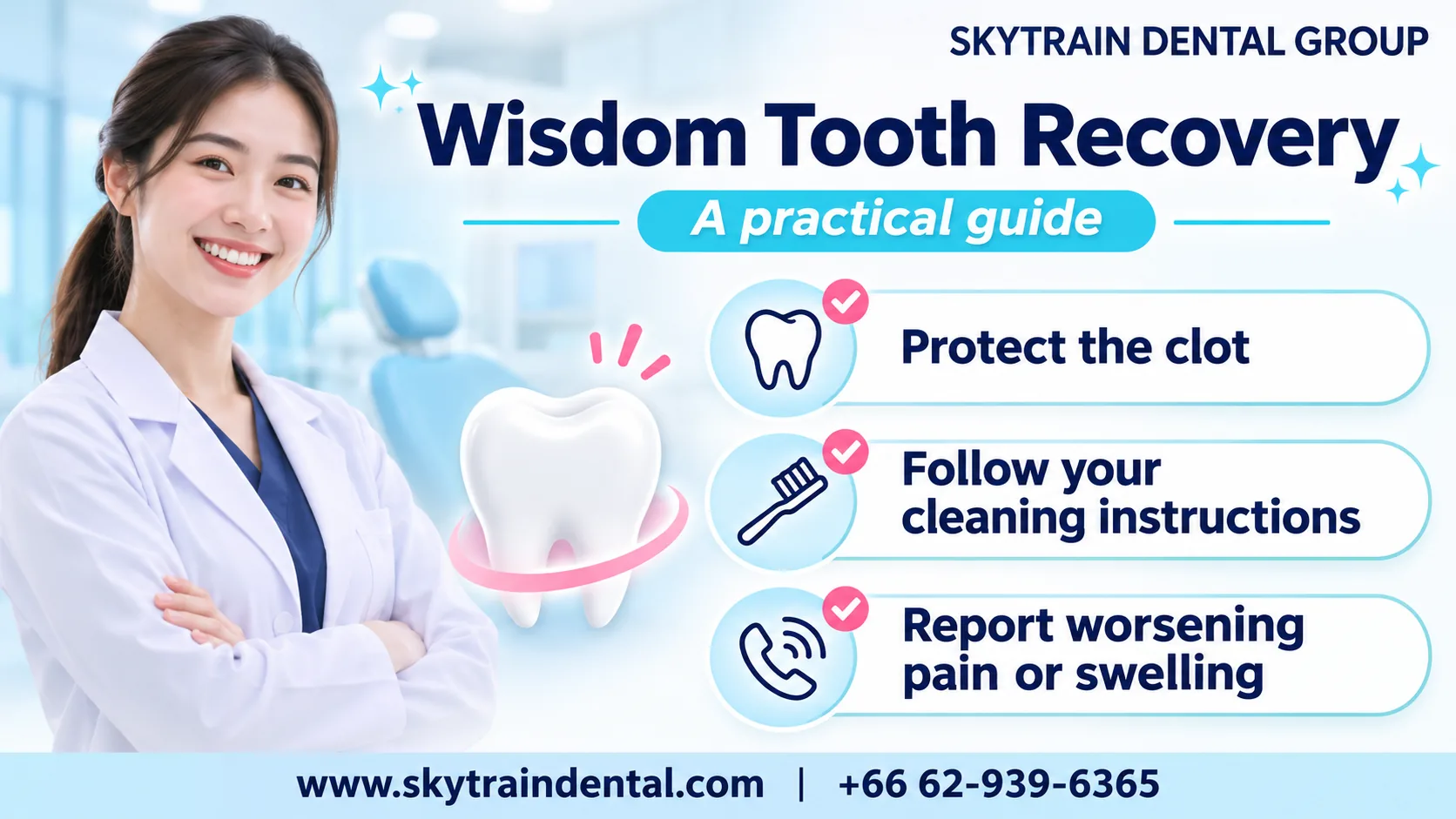
After wisdom tooth removal, protect the blood clot, rest and follow your surgeon's instructions. Avoid rinsing or spitting during the first 24 hours. Swelling can increase over the first few days, but severe or worsening symptoms, persistent bleeding or new numbness need advice.
The first 24 hours
Use gauze pressure as instructed if there is bleeding. Avoid repeated spitting, vigorous rinsing, sucking through a straw or touching the socket. Do not leave gauze in your mouth while sleeping. Choose soft, cool or lukewarm food when safe to eat, and avoid hot food while numb. Rest and avoid strenuous activity.
Swelling, food and cleaning
Swelling may build over the first two to three days after surgical removal before improving. Use an external cold compress if advised, protecting the skin. Do not automatically switch to heat at a fixed time. After 24 hours, start gentle rinsing as directed and clean other teeth carefully without disturbing the wound. Avoid hard fragments that could lodge in the socket.
Medicines and recovery planning
Take medicines according to your prescription or the label. Do not add aspirin for pain relief after surgery unless specifically advised; do not stop prescribed aspirin or other blood thinners without clinical advice. Avoid smoking and follow alcohol restrictions. If you had sedation or general anaesthesia, follow the discharge rules for supervision, driving and work.
Dry socket, infection and altered sensation
Pain that becomes much worse after initially improving, particularly with a bad taste or smell, can need assessment for dry socket or another complication. Call for fever, spreading swelling, bleeding that does not settle with pressure, or numbness that persists beyond the expected anaesthetic period. Breathing or swallowing difficulty needs emergency care.
Frequently asked questions
Should I rinse immediately after surgery?
Usually not during the first 24 hours. Follow any specific surgical instruction that differs.
Is swelling on day two always infection?
Not necessarily. Surgical swelling can peak over the first few days, but worsening symptoms and fever should be assessed.
Do all stitches dissolve?
No. Ask which type was used and whether a removal appointment is needed.
Can I drive home?
Follow your anaesthetic discharge instructions. Sedation and general anaesthesia require restrictions and an escort plan.
Speak with Skytrain Dental
For an assessment or advice about your treatment, contact Skytrain Dental Group on +66 62-939-6365 or LINE @skytraindental. Follow the instructions given by your treating clinician.
Sources and related reading
References checked 6 November 2026.
Related reading