

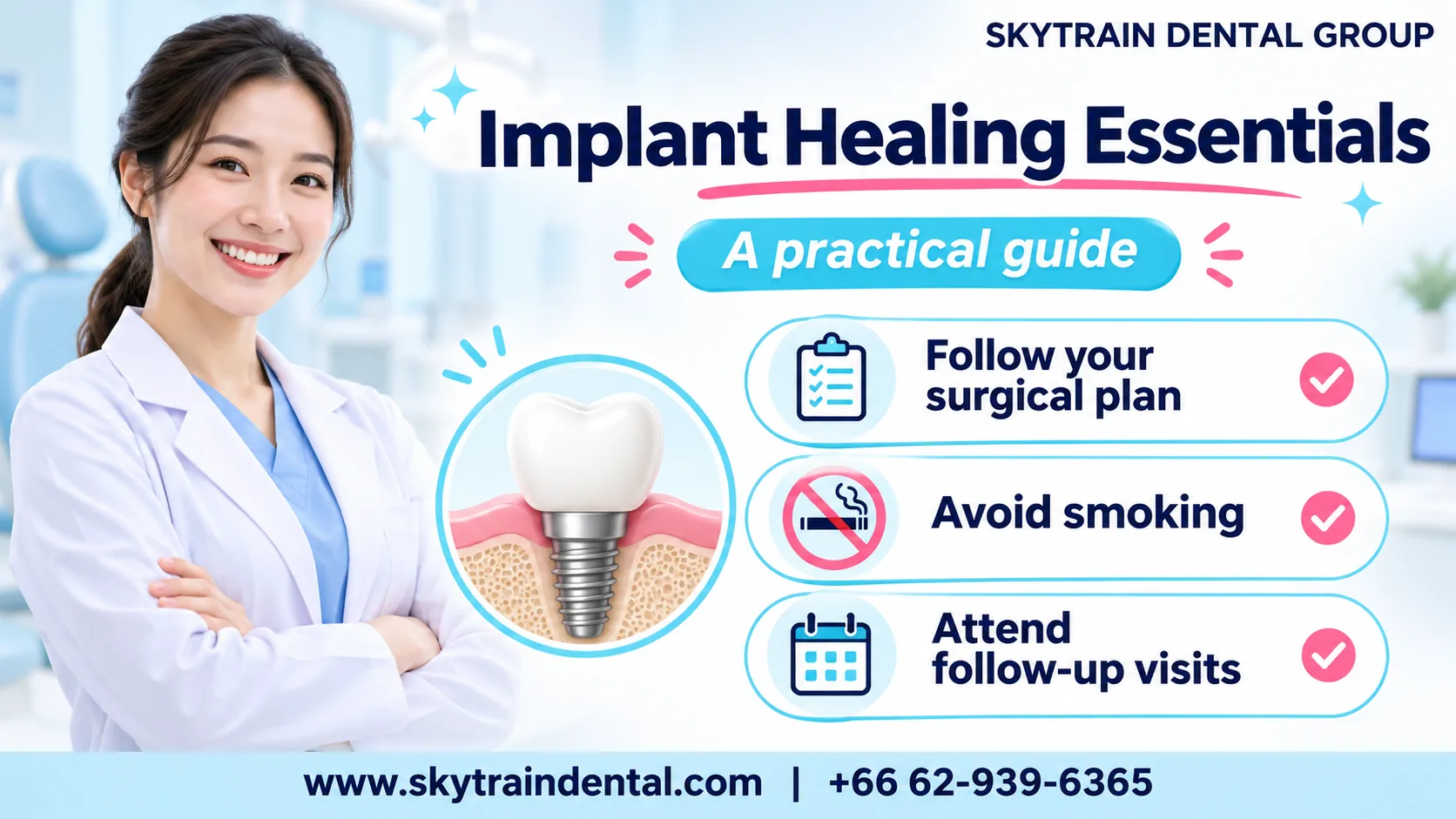
After implant surgery, protect the wound, avoid pressure on the implant and follow your surgeon's instructions for cleaning, food and medicines. Healing differs if you had grafting or an immediate temporary tooth. An implant is not ready for unrestricted biting simply because the gum feels comfortable.
The first few days
Some soreness, swelling and slight oozing may follow surgery. Rest and use any cold compress as instructed. Avoid touching the wound or pulling the lip to inspect it repeatedly. Follow the clinic's bleeding-control instructions. Seek advice if bleeding will not settle, pain or swelling is worsening, or you develop fever.
Food, smoking and medicines
Choose soft foods and chew away from the surgical area until cleared. Avoid very hot food while numb. Do not use the temporary tooth to test how strong the implant is. Avoid smoking; tell the surgeon about vaping and nicotine use as part of your recovery plan. Take prescribed medicines exactly as directed. Do not start antibiotics or change blood-thinning medication yourself.
Cleaning and stitches
Keep the rest of the mouth clean. The surgeon should tell you when and how to brush near the implant and whether a rinse is needed. Grafting and different surgical techniques can require different instructions, so a generic timetable cannot replace your written plan. Attend the wound and suture review even if you feel well.
Healing and long-term protection
Integration with bone takes time, and the loading schedule depends on bone, implant stability and treatment design. After the final restoration, clean around it daily and attend maintenance appointments. Implants cannot develop tooth decay, but the surrounding tissues can become inflamed and lose bone. Report bleeding, persistent bad taste, a loose restoration or any movement. Trouble breathing or swallowing requires emergency care.
Frequently asked questions
Can I eat normally straight away?
No. Follow the soft-food and chewing restrictions for your surgery and temporary restoration.
Does every implant need antibiotics?
No. The surgeon decides based on your procedure and health. Use them only when prescribed.
Is a moving implant normal?
No. Avoid chewing on it and contact the clinic promptly. A loose crown or screw also needs assessment.
When will I get the final tooth?
Timing is individual and may change after healing checks, especially if bone grafting was needed.
Speak with Skytrain Dental
For an assessment or advice about your treatment, contact Skytrain Dental Group on +66 62-939-6365 or LINE @skytraindental. Follow the instructions given by your treating clinician.
Sources and related reading
References checked 6 November 2026.
Related reading