
After a filling, protect your mouth while it is numb, follow the dentist's advice for the material used, and keep the tooth clean. Mild sensitivity can occur, but worsening pain, swelling, a high bite or a broken filling should be checked.
When can you eat after a filling?
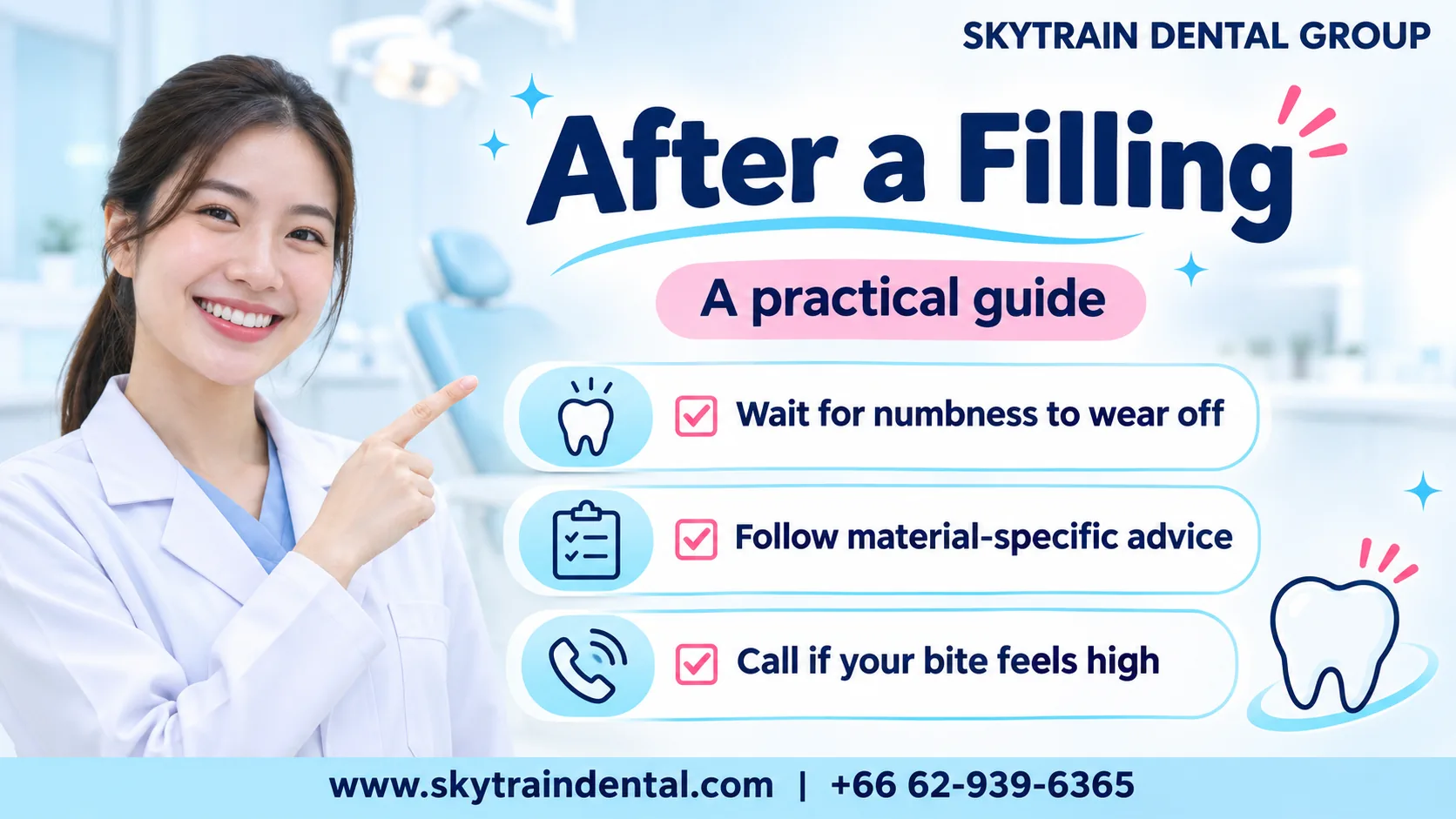
Wait until numbness has worn off before chewing so you do not bite your cheek or tongue. Avoid very hot food or drinks while sensation is reduced. Light-cured composite is hardened during the appointment, but that does not remove the risk from numbness. Amalgam and some other materials need different precautions; follow the timing given for your restoration rather than one rule for every filling.
Sensitivity and a bite that feels high
A recently restored tooth may be sensitive to temperature or pressure, especially after a deep filling. Watch for improvement. If the tooth touches first when you close, or chewing causes a sharp pain, contact the clinic for a bite assessment. Do not try to wear the filling down yourself. Persistent, spontaneous or increasing pain may need further investigation.
Daily care and foods
Resume gentle brushing with fluoride toothpaste and clean between the teeth daily. Do not avoid the restored tooth indefinitely because of mild tenderness. Choose comfortable foods at first and avoid biting ice, pens or very hard objects. Ask the dentist whether any special precautions apply to a temporary filling.
When to contact the dentist
Arrange a review if the filling cracks, comes out, repeatedly traps food, or sensitivity is not settling. Seek urgent care for facial swelling, fever or severe pain. Difficulty breathing or swallowing needs immediate emergency assessment. Keep the planned follow-up if the dentist is monitoring a deep cavity.
Frequently asked questions
Can I brush the same day?
Usually yes. Brush gently unless your dentist gave different instructions for the procedure.
Does sensitivity mean the filling failed?
Not necessarily. Short-term sensitivity can occur, but the pattern and severity matter. Increasing or persistent symptoms need assessment.
Should everyone use fluoride mouthwash?
No. It may help selected patients at higher decay risk. It supplements brushing and interdental cleaning rather than replacing them.
Can I repair a lost filling at home?
Do not use household glue or try to reshape the tooth. Contact the dentist and protect the area from heavy chewing until reviewed.
Speak with Skytrain Dental
For an assessment or advice about your treatment, contact Skytrain Dental Group on +66 62-939-6365 or LINE @skytraindental. Follow the instructions given by your treating clinician.
Sources and related reading
References checked 6 November 2026.
Related reading